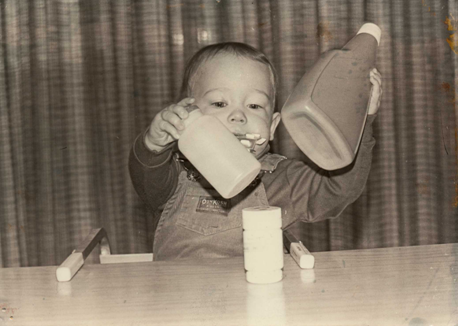
In the 1960s, a Canadian physician saw daily cases of unintentional childhood poisoning. In response, Dr. Henri J. Breault created child-resistant packaging. By 1970, the U.S. passed the Poison Prevention Packaging Act (PPPA), requiring specific products to be protected with this type of packaging. These measures significantly reduced childhood poisonings and fatalities.
Protecting children is only part of the equation. With around nine in 10 seniors taking prescription medication, it’s important for packaging to be accessible to those who need it, too. Through testing, manufacturers verify that seniors can access their products while children stay safe.
CPSC child-resistant packaging is designed to be infeasible for small children to open while still being accessible for older adults. Its goal is to reduce the risk of child exposure to poisonous substances.
The U.S. Consumer Product Safety Commission (CPSC) oversees the PPPA, and the U.S. Environmental Protection Agency (EPA) also mandates specialized packaging for specific products. There are additional international standards, including ISO 8317 for reclosable packages, ISO 14375 for non-reclosable packaging, and ISO 13127, which defines packaging test methods for reclosable systems.
Under the PPPA, the following products require child-resistant packaging tested in accordance with regulatory standards:
Packaging designs intended for child resistance include the following:
Child-resistant packaging testing involves controlled procedures in which a specific number of young children, usually up to 100 participants aged 42-51 months The child is given the unopened package by our trained testers and told to attempt to open it to obtain the contents.
Participants have five minutes of attempts, with no demonstrations of how the package operates, no verbal coaching and only limited encouragement to continue attempting to open the package.
After 5 minutes, the tester demonstrates the proper opening method without allowing the child to practice. The child then receives an additional 5-minute opportunity. After a demonstration of the proper opening method, at least 80% of children still cannot open the package during the full 10-minute test would be considered passing.
Child-resistant packaging testing may need to comply with the following standards:
Age-related medical conditions can lead to limited vision, tremors, decreased grip strength, and limited dexterity, all of which can make child-resistant packaging difficult to open. Manufacturers address these challenges with color-coded directions, larger print, and easier-to-open mechanisms. Senior use testing is one way manufacturers can determine whether this kind of patient-centric design provides accessibility.
Senior use testing, introduced in 1996, involves a panel of seniors, usually 100 participants between the ages of 50 and 70. Seventy percent of the participants are female. Panelists get five minutes to open and re-close the container if it is resealable. If they do so within five minutes, they receive the same type of package and have one minute to open and re-close it. A package passes the test if at least 90% of seniors complete both phases.
Senior use testing promotes medication adherence. When seniors can’t access medication or household products, they may transfer products to accessible packaging, which undercuts child-resistant features. Senior use testing supports intended use.
Both child-resistant packaging and senior use testing are crucial for safety. Seniors may need medication to control blood pressure and other chronic conditions, so it’s essential that they can open packages, even if they have mobility concerns. Children need protection from household cleaners, medication and other products that can harm them. Conducting both tests protects children and seniors.
Manufacturers are responsible for ensuring packaging meets CPSC regulations. The CPSC does not issue approvals or conduct testing. In many cases, package manufacturers test and maintain a General Certificate of Conformity (GCC) for their packaging to help product manufacturers stay compliant.
Noncompliance can expose you to liability and fines. The CPSC can also demand recalls, halt sales and distribution, and seize inventory.
Since 1973, Perritt Laboratories has tested hundreds of thousands of panelists, both children and senior adults. We’re accredited to perform child-resistant package testing and have been at the forefront of developing CPSC testing protocols. We’ve tested thousands of different packaging systems for both child-resistance and senior-use effectiveness.
Everyone has a role in protecting children and the end users of medications and consumer products. We go beyond compliance checklists and partner closely with you to develop tailored testing protocols that safeguard your brand reputation and our communities. Contact us today to discuss your testing needs.